Business Inquiry
Identify the retail, foodservice, or combined operation and describe the products, customer occasions, and purchasing requirements the business needs to support.
Business service 06
Two distinct channels. Requirements that deserve equal attention.
Discuss Your Business Requirements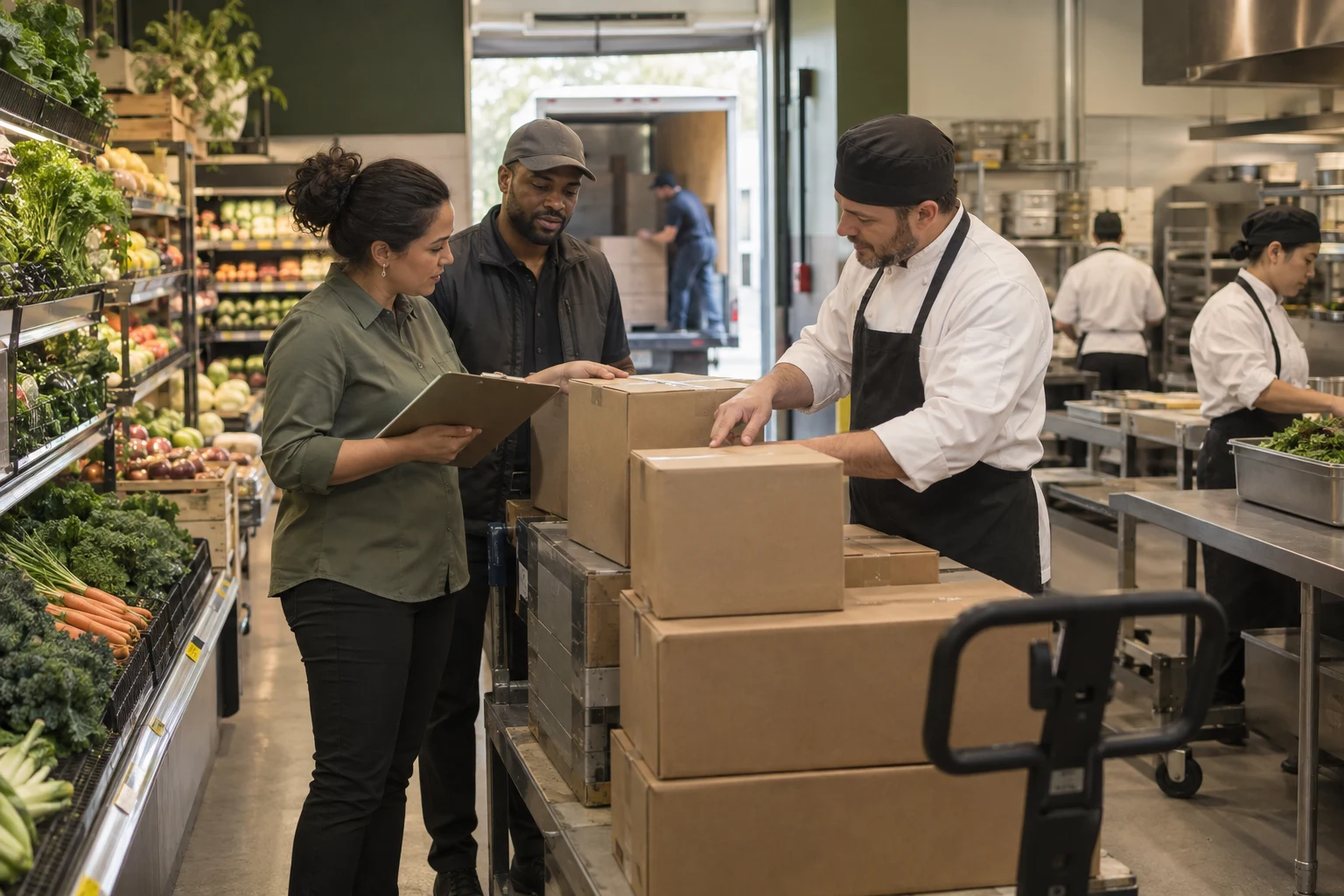
Retail / Grocery / Restaurants / Foodservice
We provide food supply solutions designed for both retail and foodservice environments. Our product selection can support supermarkets, grocery stores, convenience stores, specialty retailers, restaurants, catering businesses, and other foodservice operators.
By understanding different channel requirements, we aim to provide products and supply arrangements that are practical for each business environment. Our flexible approach helps customers build suitable product assortments while maintaining a reliable source of food products.
Retail and foodservice share a need for dependable product information and workable commercial arrangements, but their daily operating needs often differ. We give both channels equal attention. A consumer pack designed for shelf display may not suit a busy preparation area, while a large kitchen container may be unsuitable for a household shopper. Understanding the intended environment is the starting point for product selection.
Our role is to connect those channel requirements with relevant food categories and supply discussions. Packaged foods, snacks, beverages, sauces, oils, grains, and canned foods can all play different roles depending on the business. Rather than assuming that one assortment serves every setting, we discuss the intended use, handling conditions, and commercial priorities for each requirement.
Retail inquiries may focus on pack presentation, shelf dimensions, product information, case configuration, and the shopping occasion. A convenience store may emphasize portable formats, while a grocery business may need household pantry sizes or complementary category coverage. Customers can explain the audience they serve and any merchandising constraints that will influence the selection.
A proposed retail product should be reviewed against the exact information available for that item. Images cannot establish ingredients, nutritional characteristics, shelf life, or regulatory suitability. Where labeling or other product documentation is necessary for the customer’s evaluation, those needs should be identified before a commercial agreement is finalized. Retail decisions remain with the buyer.
Foodservice customers may evaluate preparation method, portion yield, container handling, storage after opening, and compatibility with existing recipes. A caterer preparing for a scheduled event may have different timing needs from a restaurant purchasing recurring ingredients. Describing the operating context helps turn a broad category request into a more useful product brief.
Kitchen teams should identify ingredient restrictions, allergen considerations, and any product characteristics essential to their menu. These details need confirmation for the actual proposed goods. If a substitute is considered, it should be assessed for its effect on recipes, handling instructions, and customer information rather than accepted solely because it has a similar appearance.
Suitable customers include supermarkets, grocery stores, convenience retailers, specialty food shops, restaurants, catering businesses, hospitality operators, and commercial foodservice teams. A customer with several business activities can identify each channel in the inquiry so the discussion addresses its different product, storage, and receiving needs.
Illustrative application scenario: a business operates a small grocery area alongside a prepared-food counter. It needs consumer beverage packs for shoppers and ingredient formats for kitchen preparation. A channel review separates the merchandising and kitchen requirements, assesses relevant products, and identifies shared receiving needs. This scenario explains a possible service application without implying an actual customer engagement or a promised outcome.
Identify the retail, foodservice, or combined operation and describe the products, customer occasions, and purchasing requirements the business needs to support.
Review each channel’s packaging, storage, ingredient, merchandising, preparation, and receiving requirements, keeping essential differences visible throughout the discussion.
Assess proposed products against their intended channel and confirm which formats and specifications the customer considers suitable for further commercial review.
Agree the selected goods, quantities, channel-specific conditions, payment terms, delivery responsibilities, and acceptance process in the relevant written agreement.
Coordinate confirmed information and agreed supply activities, and direct subsequent product or delivery questions through the established business contact process.
Channel support does not replace the customer’s responsibility for safe food handling, suitable facilities, menu decisions, or retail operations. Exact product suitability and commercial availability require review. Any specialized service or continuing supply obligation must be expressly included in the agreement.
Discuss Your Business RequirementsBusiness inquiries
Share your organization, purchasing goals, and timing so we can review the next steps together.
Or email support@lintradinginc.com.